After the stress of a car accident, understanding the next steps can bring significant peace of mind. One of the very first and most crucial stages is the collision repair estimate. This is much more than just a quick glance at a dent; it is a meticulous process where a trained professional assesses the full extent of the damage to your vehicle. During this evaluation, an estimator documents every scratch, ding, and broken part, both visible and hidden, to create a detailed roadmap for the repair. This initial blueprint is essential for you, the repair facility, and your insurance company. It ensures transparency by outlining the necessary parts, the specific labor operations required, and the projected costs to restore your vehicle to its pre-accident condition. A thorough and accurate estimate is the foundation of a safe and high-quality repair, setting the stage for everything that follows.
The detailed document you receive is the result of this comprehensive inspection. It is not just a price quote but a preliminary repair plan that translates the physical damage into a clear list of procedures and components. This estimate will be the primary communication tool between our technicians and your insurance adjuster, ensuring all parties are aligned on the scope of work. Understanding what goes into this process helps you ask the right questions and feel confident that your vehicle is in expert hands from the very beginning.
A Step-by-Step Look at the Damage Assessment Process
The collision repair estimate is a systematic procedure designed to be as accurate as possible from the outset. While unforeseen issues can arise once repairs begin, a professional estimator uses their expertise and advanced tools to create a comprehensive initial report. This process ensures efficiency and helps manage expectations for the repair timeline and cost. Let us break down exactly what happens from the moment you arrive at the shop to the moment you have a detailed repair plan in your hands.
Step 1: The Initial Check-In and Information Gathering
Your experience begins with a conversation. A service advisor or estimator will greet you and ask for details about the collision. This is not just small talk; understanding how the impact occurred gives them vital clues about where to look for potential hidden issues. They will ask for your contact information, vehicle details (VIN, year, make, model), and your insurance policy information. If you have already filed a claim, providing the claim number at this stage is crucial. It is also helpful to review what documentation you need for an auto body insurance claim before you arrive to streamline this process.
Step 2: The Comprehensive Visual Inspection
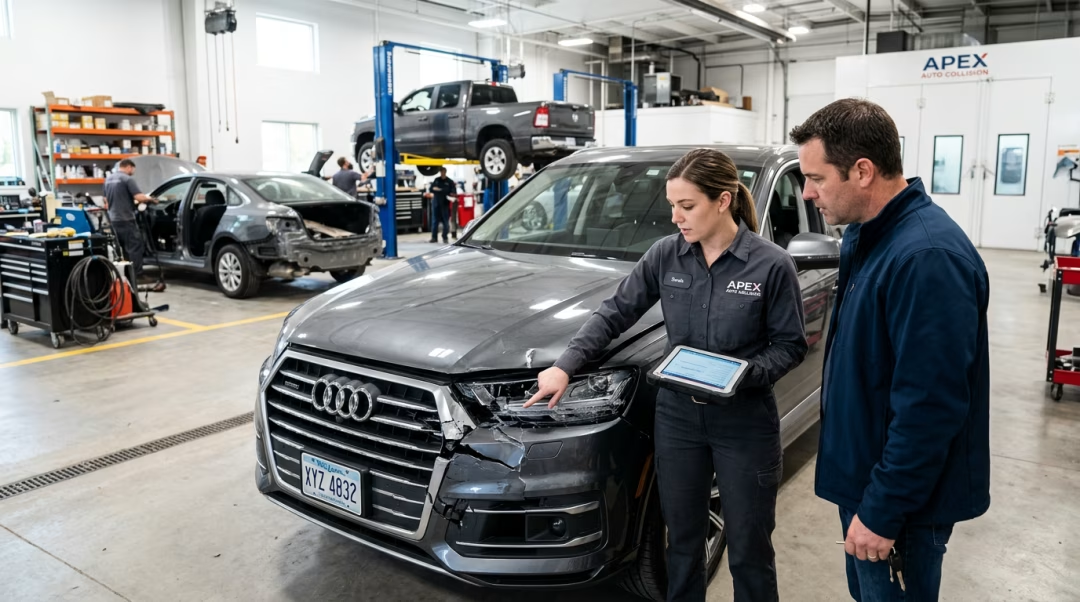
This is the hands-on part of the process. The estimator will conduct a thorough walk-around of your vehicle, meticulously examining every panel. They are trained to spot more than just the obvious damage. They will look for:
- Direct Damage: The primary points of impact, including dents, deep scratches, cracked bumpers, and broken lights.
- Indirect Damage: Ripples or waves in adjacent panels that indicate the force of the impact traveled through the vehicle's body.
- Panel Gaps: Uneven spacing between body panels (like the hood and fender) can be a clear sign of underlying structural shifts.
- Paint and Finish Flaws: Checking for cracked paint or scuffs that might seem minor but require significant refinishing work.
During this phase, the estimator will take numerous high-resolution photos from various angles. These images serve as critical evidence for the insurance company, documenting the vehicle's condition before any work begins.
Step 3: Uncovering Hidden Damage
A vehicle's exterior often conceals a complex network of components. A seemingly minor fender bender can cause significant problems that are not visible at first glance. Estimators are trained to anticipate and look for these issues. For example, a dented bumper cover could be hiding a cracked reinforcement bar, a damaged parking sensor, or even a bent radiator support. This is why it is so important to understand what hidden damage looks like after a minor accident. In some cases, a preliminary teardown may be necessary, which involves removing a damaged part like a bumper or headlamp to inspect the structure behind it. This step is key to creating an accurate initial estimate and avoiding major delays later in the repair process.
Step 4: Using Advanced Estimating Software
Once the physical inspection is complete, the estimator transfers their findings into a sophisticated software platform. This is not just a simple spreadsheet. These programs contain vast databases provided by vehicle manufacturers, outlining every single part of your car, its corresponding part number, and its current price. The software also includes standardized labor times for nearly every conceivable repair and refinish operation. This technology ensures consistency and fairness, as the estimate is based on industry-accepted data rather than guesswork. The estimator will input each damaged part, specify whether it needs to be repaired or replaced, and add the associated labor hours for bodywork, painting, and any necessary mechanical adjustments.
Step 5: Parts, Labor, and Modern Technology Considerations
The estimate will clearly detail the parts needed for the repair. You may see terms like OEM (Original Equipment Manufacturer), aftermarket, or reconditioned. We believe that understanding why OEM parts matter in collision repair is vital for ensuring the safety and integrity of your vehicle. The estimate also breaks down labor into different categories, such as "Body Labor," "Paint Labor," and "Mechanical Labor."
Furthermore, modern vehicles are packed with advanced technology. A collision can easily affect the sensitive components of an Advanced Driver-Assistance System (ADAS). The estimate must account for the diagnostic scans needed to identify system faults and the precise work involved in how sensors and cameras are recalibrated after body repair. This is a non-negotiable step for restoring your vehicle's factory safety features.
Step 6: Review and Explanation
The final step is presenting the estimate to you. A good estimator will not just hand you a piece of paper. They will take the time to walk you through each line item, explaining what it means and why it is necessary. This is your opportunity to ask questions and gain clarity. They will explain the total estimated cost, the anticipated timeline, and what to expect next regarding insurance approval. This is also when you will discuss scheduling the actual repairs and arranging for a rental car if needed.
What About Supplements?
It is important to know that the initial estimate is often just that—an initial assessment. Once the vehicle is in the shop and the teardown process begins, our technicians may uncover additional damage that was impossible to see during the first inspection. When this happens, we document the new findings and submit a "supplement" to the insurance company for approval. This is a normal and expected part of the auto body insurance claims process and ensures that every bit of damage is properly addressed.
How long does a collision repair estimate typically take?
A standard visual estimate for moderate damage usually takes about 20 to 30 minutes. This includes the vehicle walk-around, photo documentation, and entering the data into the system. If the damage is extensive or requires a minor teardown to inspect hidden areas, it could take closer to an hour.
Do I need an appointment to get an estimate?
While some shops accept walk-ins, scheduling an appointment is always recommended. An appointment ensures that an estimator is available to dedicate their full attention to your vehicle as soon as you arrive, minimizing your wait time and allowing for a more thorough assessment. You can always contact us to schedule a convenient time.
Is there a charge for getting a repair estimate?
Most reputable auto body shops offer free visual estimates for collision damage. The estimate is a key part of earning your business. However, if an extensive teardown or advanced diagnostic scanning is required to determine the full scope of damage, a fee for that specific labor may apply, which is often covered by insurance if you proceed with repairs.
What if my insurance company's estimate is lower than the shop's estimate?
This is a very common situation. Insurance adjusters often write an initial estimate based only on visible damage, sometimes without seeing the car in person. Our shop's estimate is typically more comprehensive because it is written by a technician who physically inspects the vehicle for hidden damage. We work directly with all insurance companies to submit supplements and negotiate on your behalf to ensure every necessary repair is covered.
Can the repairs begin immediately after the estimate is completed?
Repairs typically cannot begin until we have received authorization from you and, in most cases, your insurance company. Once the estimate is approved, we can schedule the repair, order the necessary parts, and move your vehicle into the production workflow. The time between estimate approval and the start of repairs depends on part availability and our current shop schedule.
