When your vehicle needs body work after a collision or for cosmetic touch-ups, one of the biggest concerns is whether the new paint will match the rest of the car. A mismatched panel is an obvious sign of repair, negatively impacting your vehicle's appearance and resale value. The secret to an invisible repair lies in a meticulous process that starts with the factory paint code but involves so much more. Professional auto body shops combine advanced technology with skilled artistry to achieve a flawless finish. It is not as simple as looking up a code and spraying. Technicians must account for factors like sun fade, factory variations, and paint texture to create a truly seamless result. This intricate process ensures that once the repair is complete, the only person who knows it happened is you. Achieving this level of quality protects your investment and restores your pride in your vehicle’s appearance.
Achieving a perfect paint match is about more than just aesthetics; it is about preserving the value and integrity of your vehicle. A high-quality paint job from a reputable shop acts as the first line of defense against the elements, preventing rust and corrosion on newly repaired panels. When you decide to value your trade or sell your car, a professional and undetectable repair will ensure you get the best possible price. It demonstrates a commitment to proper maintenance and care that prospective buyers appreciate.
The Starting Point: Understanding Factory Paint Codes
Every vehicle that leaves the assembly line has a specific paint code assigned to it. This code is an alphanumeric formula that corresponds to the exact mixture of pigments and toners used to create the original color. Think of it as a recipe. This code is crucial for any body shop because it provides the foundational formula for the new paint. You can typically find this code on a sticker or metal plate in one of several locations:
- Inside the driver-side door jamb
- Under the hood, on the firewall or strut tower
- In the glove compartment or trunk
While this code is the essential starting point, a professional painter knows it is rarely the complete solution. Relying solely on the factory code would almost certainly result in a noticeable mismatch. Several variables prevent a brand-new batch of paint from perfectly matching the paint already on your vehicle.
Why the Paint Code Alone Is Never Enough
A vehicle's paint is constantly exposed to the environment, and its appearance changes over time. Furthermore, even the original factory application has variables that must be replicated. A top-tier collision repair shop understands these nuances and compensates for them.
Sun Exposure and Weathering: The most significant factor is weathering. Ultraviolet (UV) rays from the sun, acid rain, road salt, and environmental pollutants gradually break down the paint's clear coat and pigments. This causes the color to fade and change its shade. A car driven daily in sunny Northern Kentucky will have a slightly different color after five years than an identical one kept in a garage. Applying a fresh coat based on the original formula would create a stark contrast against the weathered panels. You can learn more about how weather damage is repaired on our blog.
Factory Batch Variations: Car manufacturers produce paint in enormous batches. Although they strive for consistency, minor variations can occur between batches. A vehicle painted on Monday might have a microscopically different shade than one with the same paint code produced on Friday. These differences are unnoticeable across an entire car but become apparent when a newly painted panel is placed next to an original one.
Application Differences: The way paint is applied—the pressure of the spray gun, the speed of the robotic arm at the factory, and the humidity on the day of painting—can affect the final color and texture. This includes the subtle "orange peel" texture seen on most factory finishes. A repair shop must replicate this texture for the repair to be truly invisible. If you have ever seen a repair with a strange texture, you know what causes orange peel and why matching it is so important.
The Modern Paint Matching Process: A Blend of Technology and Craftsmanship
To overcome these challenges, auto body shops use a multi-step process that combines cutting-edge technology with the irreplaceable skill of an experienced paint technician. This ensures the new paint is a perfect match for the existing finish on your specific vehicle, not just what the factory code dictates.
Step 1: Digital Color Analysis with a Spectrophotometer
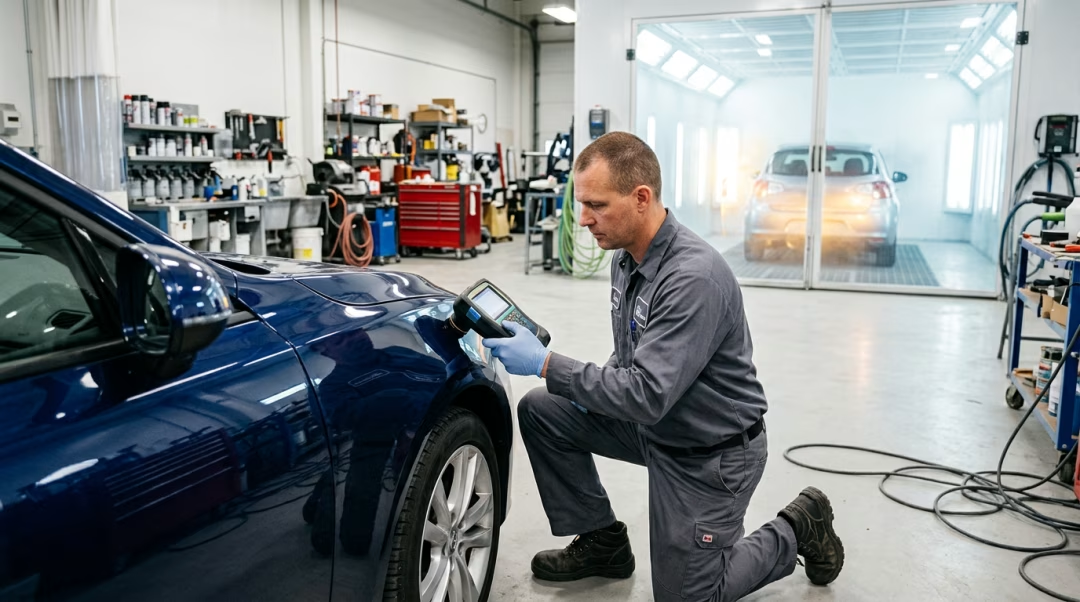
This is where modern technology truly shines. A technician uses a handheld device called a spectrophotometer. This tool is placed directly on a clean, polished area of the vehicle adjacent to the damaged panel. It shines a calibrated light source onto the paint and measures the exact wavelength of the light that reflects off it. It analyzes not just the color but also the texture and the characteristics of metallic or pearlescent flakes. The device provides a digital formula that is far more accurate than the original factory code, as it accounts for the current state of the paint. For more detail, read our guide on how auto paint color-matching technology works.
Step 2: Creating Spray-Out Cards
Using the formula from the spectrophotometer, the technician mixes a small sample of the paint. They then spray this sample onto a small metal panel known as a "spray-out card" or "test panel." They apply the base coat and clear coat just as they would on the vehicle. This step is critical because paint color can look different when wet versus when it is dry and cured. The test card provides a true representation of the final color.
Step 3: The Human Touch and Final Tinting
Once the spray-out card is dry, the technician takes it and compares it directly to the vehicle's paint. This is where artistry and experience come into play. The technician will check the match under multiple light sources, including natural sunlight and specialized shop lights, to see how it looks from different angles. If the match is not 100% perfect, they will return to the mixing station and make minuscule adjustments, adding a drop of a specific toner to slightly alter the hue, brightness, or flop until it is an exact match. This iterative process is repeated until the test card is indistinguishable from the car's original paint.
Step 4: The Art of Blending
Even with a seemingly perfect color match, professionals use a technique called blending to ensure a completely seamless transition. Instead of painting only the repaired panel, the technician will lightly spray the new paint onto the adjacent panels (like the door or fender next to the repaired one). The new paint is faded into the old paint, eliminating any hard lines and tricking the human eye into seeing one continuous color. This is a hallmark of a high-quality repair and is expertly explained in our article on why painters use blending.
Step 5: Finishing with a Perfect Clear Coat
The final step is the application of the clear coat. This protective layer is what gives the paint its gloss, depth, and durability against the elements. The technician must apply the clear coat with the same thickness and texture as the factory finish to ensure a uniform shine across the entire vehicle. After application, the paint is cured, often by baking it in a controlled-environment paint booth, to achieve maximum hardness and longevity.
Frequently Asked Questions About Paint Matching
Can you match complex paints like metallic, pearlescent, or tri-coats?
Absolutely. While these paints are more challenging, the combination of a spectrophotometer and skilled technicians makes it possible. The spectrophotometer analyzes the size and distribution of the metallic or pearl flakes. The technician must then use precise application techniques to ensure those flakes lay down in the same direction as the factory paint to achieve the correct shimmer and color shift effect from different angles.
Why does my newly painted panel look slightly different in certain light?
This phenomenon is called metamerism. It occurs when two colors appear to match under one light source (like fluorescent shop lights) but look different under another (like natural sunlight). Professional shops minimize this by using multiple light sources during the color verification process and by expertly blending the new paint into adjacent panels, which makes any minor difference impossible for the eye to detect.
How long does new auto paint take to fully cure?
While the paint may feel dry to the touch within hours of leaving the shop, a full cure takes much longer. The solvents in the paint need to evaporate completely, a process called "gassing out." This can take anywhere from 30 to 90 days. During this period, it is critical to follow specific care instructions, such as avoiding commercial car washes and not applying wax. We have a helpful guide on how long to wait before waxing for more information.
Can a body shop match the paint on an older or classic car?
Yes, and this is where modern technology is especially valuable. For older vehicles, the original paint code is often a poor reference due to decades of fading and weathering. A spectrophotometer is essential for analyzing the paint's current state to create an accurate formula from scratch. Technicians skilled in classic car restoration can perfectly replicate aged and unique colors.
What happens if I am not satisfied with the paint match?
A reputable and professional auto body shop will stand behind its work. Customer satisfaction is the top priority. If the color match does not meet your expectations, the shop should be willing to reassess and redo the work to get it right. Always ask about the warranty coverage on paint and body work before authorizing any repairs to ensure you are protected.
