The four distinct and often intense seasons in Northern Kentucky present a unique set of challenges for vehicle owners. From the humid, sun-drenched days of summer to the icy, salt-covered roads of winter, the local climate is constantly working against your car's exterior. This relentless cycle of heat, cold, moisture, and chemical exposure can accelerate paint fading, promote rust, and lead to physical damage like dents from hail. Understanding how our specific weather patterns affect a vehicle's body is crucial, not just for maintaining your current car but also for making an informed decision when purchasing a pre-owned vehicle. A car that has been well-maintained and protected from these elements will offer significantly more value and longevity. Being aware of these regional risks is the first step toward safeguarding your automotive investment and ensuring your vehicle remains in excellent condition for years to come.
Navigating the pre-owned vehicle market requires confidence that you are choosing a car built to last, especially in a climate like ours. At our dealership, we understand the toll Northern Kentucky's weather can take. That is why our team meticulously inspects every single vehicle for signs of premature wear, rust, and weather-related body damage. By browsing our inventory, you can be certain that you are looking at cars, trucks, and SUVs that have been vetted for quality and durability, giving you peace of mind with your purchase.
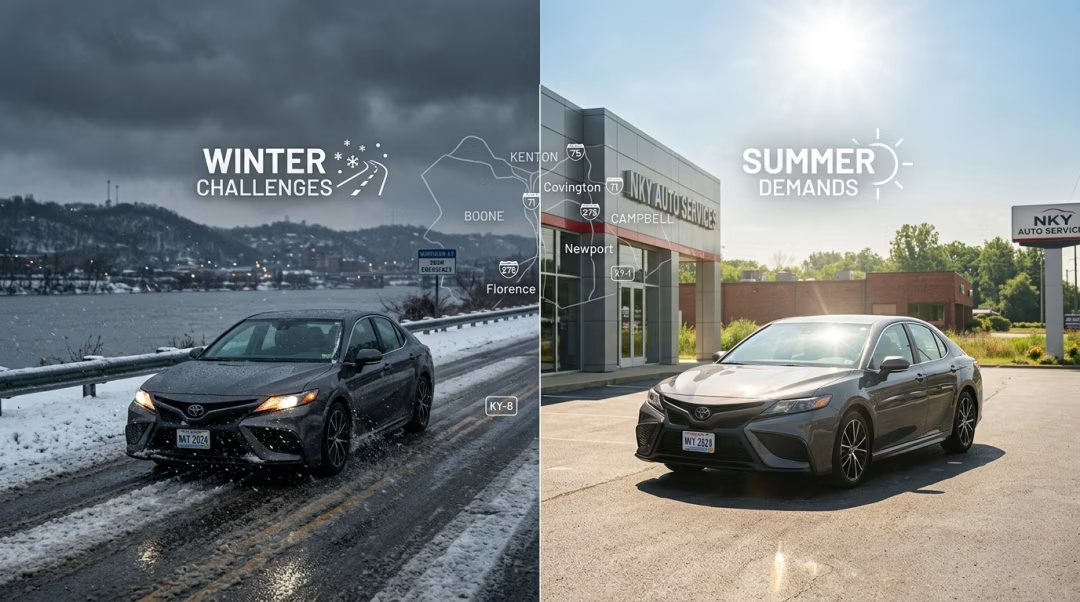
A Year-Round Assault: Understanding NKY's Climate Impact
Living in Northern Kentucky means experiencing a full spectrum of weather conditions, and each season brings its own specific threat to your vehicle's paint, metal, and trim. Unlike drier or more temperate climates, the Ohio Valley region delivers a potent combination of humidity, precipitation, and significant temperature swings that can cause a surprising amount of damage over time. From the corrosive brine on winter roads to the intense UV rays of summer, your vehicle's body is in a constant battle with the elements. Recognizing these specific threats is essential for any car owner who wants to preserve their vehicle's appearance, structural integrity, and resale value. This guide will break down the seasonal risks and provide actionable advice on what to look for and how to protect your investment.
Winter's Wrath: The Corrosive Threat of Salt and Ice
Winter in Northern Kentucky is arguably the harshest season for any vehicle. When snow and ice accumulate, road crews deploy a mixture of rock salt and chemical brines to keep the roads safe. While effective for traction, these materials are incredibly corrosive to metal. The salty slush splashes up into the undercarriage, wheel wells, rocker panels, and door seams, where it can linger for weeks. Any small chip or scratch in your paint, often caused by gravel and debris kicked up during winter driving, becomes an open invitation for rust to begin. As explained in our guide on how winter road salt affects vehicle paint and body panels, this process is accelerated by moisture from melting snow and ice. This hidden corrosion can compromise structural components over time if left unchecked, making regular underbody washes during the winter months a critical maintenance step.
Spring Storms and Summer Sun: A One-Two Punch
As the snow melts, the threat shifts. Spring in the Ohio Valley is known for severe thunderstorms that can pop up with little warning, and with them comes the risk of hail. Hailstones can cause hundreds or even thousands of dollars in damage, leaving behind a constellation of dents and dings on the roof, hood, and trunk. Assessing and repairing this type of damage is a specialized process, as detailed in our overview of how hail damage is repaired. Beyond hail, the frequent spring rain can be slightly acidic, which can etch and dull your vehicle's clear coat over time.
Following spring, the summer sun brings its own form of attack. The intense, direct sunlight and high UV radiation levels relentlessly bake your vehicle's paint. This leads to oxidation, which causes the color to fade and the finish to appear dull and chalky. This is a common issue that drivers often wonder about, and we explore it further in our article on what causes paint to fade or oxidize. High humidity in the summer also means more moisture in the air, which can find its way into hidden areas and continue to fuel any fledgling rust that began in the winter.
Protecting Your Vehicle and Inspecting a Used Car
While you cannot change the weather, you can take proactive steps to protect your vehicle from its effects. Partnering with a trusted dealership like ours, as you can learn about in our about us page, is a great start. Consistent preventative maintenance is key to preserving your car's body and finish.
- Regularly wash your vehicle, especially in winter, to remove salt and grime. Pay special attention to the undercarriage.
- Apply a quality wax or sealant every few months to create a protective barrier against UV rays and moisture.
- Whenever possible, park in a garage or use a high-quality car cover to shield your vehicle from sun, hail, and debris.
- Promptly touch up any paint chips or scratches to prevent rust from forming on the exposed metal.
- Consider long-term solutions like paint protection film or learning about how ceramic coating works to provide a durable, sacrificial layer over your paint.
When you are in the market for a pre-owned vehicle, knowing how to spot potential weather damage is a valuable skill. Look for bubbling paint or surface rust along the bottom of doors, fenders, and rocker panels. Check the undercarriage for excessive scaling or flaking on the frame. Inspect the roof and hood in bright, indirect light to reveal any subtle dents from past hail storms. It is also wise to understand how to spot quality paint work, as this can indicate if a vehicle has had previous damage professionally repaired. Our commitment is to offer a transparent buying experience, and we encourage you to ask questions and inspect any vehicle on our lot thoroughly. If you have any questions, please do not hesitate to contact us.
What is the biggest weather-related threat to cars in Northern Kentucky?
While hail and sun damage are significant, the most pervasive and potentially damaging threat is rust caused by winter road salt and brine. This corrosive material gets into hidden areas of a vehicle's underbody and can compromise its structural integrity over time if not regularly washed off.
How can I tell if a used car has hidden rust damage?
Look for paint bubbling, especially on lower body panels like rocker panels, fender lips, and the bottom of doors. Use a flashlight to inspect the frame rails and subframes underneath the car for heavy scaling or flaking metal. Also, check inside the trunk under the carpeting for signs of moisture or rust.
Is hail damage always expensive to fix?
The cost varies greatly depending on the severity. Minor damage can often be affordably corrected using paintless dent repair (PDR) techniques. However, widespread, severe hail damage that has cracked the paint can require extensive bodywork and repainting, which can be quite costly and may even lead an insurance company to total the vehicle.
Does a car being from Northern Kentucky mean it will definitely have weather damage?
Not at all. A vehicle that has been diligently cared for—parked in a garage, washed regularly in winter, and kept waxed—can remain in excellent condition for many years, even in this climate. The key is consistent maintenance and proactive protection, which is why a vehicle's history and condition are more important than its location alone.
How does your dealership ensure your cars are free from severe weather damage?
We have a rigorous inspection process for every vehicle we consider for our inventory. Our experienced technicians specifically look for signs of advanced rust, previous poor-quality body repairs, and other issues caused by weather exposure. We only select vehicles that meet our high standards for structural integrity and cosmetic condition, ensuring our customers get a reliable and well-maintained car.
